Click here to discover the 5 major changes
1. Change 1
Use of a common semantic data standard
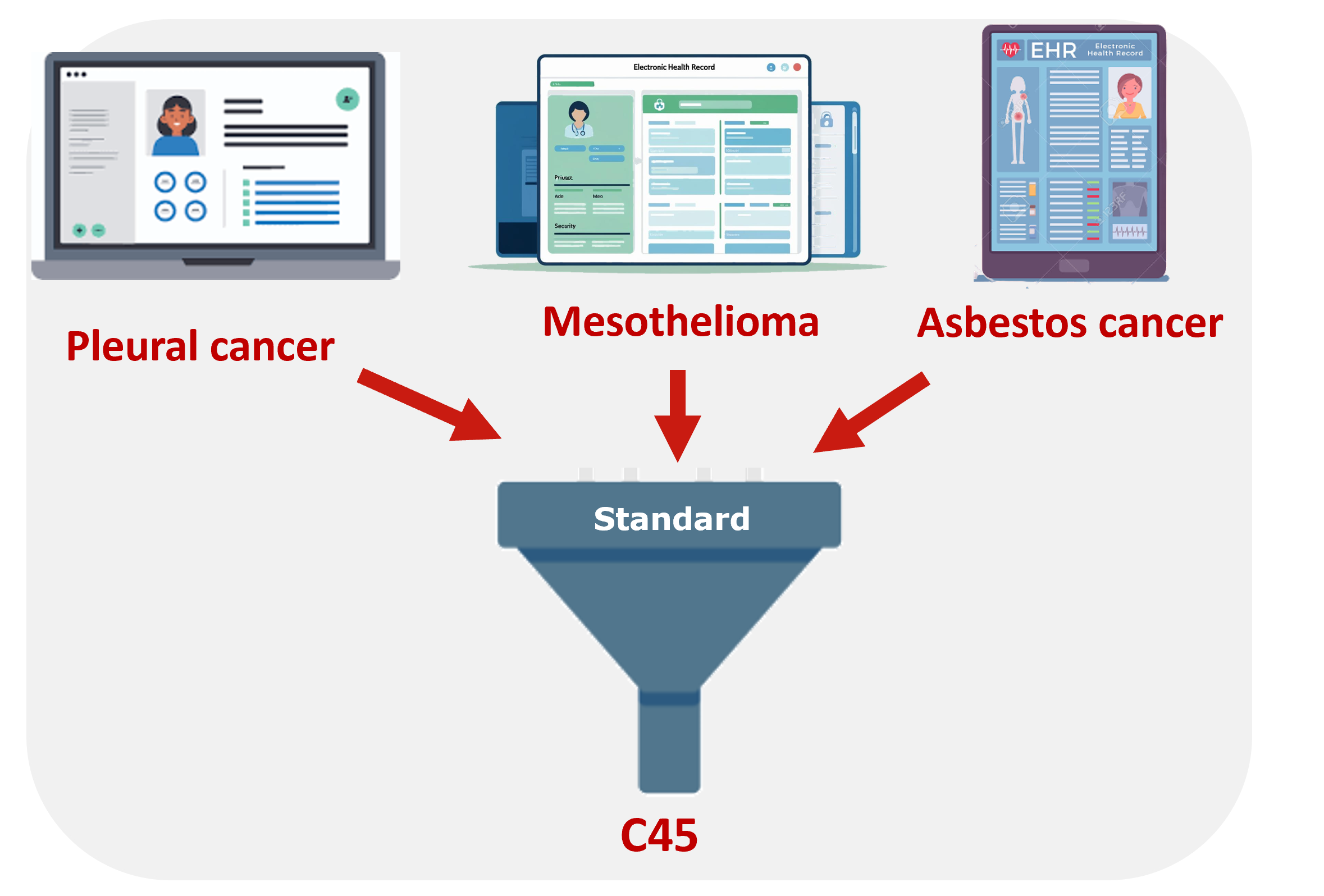
There will be a common semantic data language to link different names for the same medical condition into one single diagnosis code. For instance, one doctor writes "pleural cancer" in the Electronic Health Record (EHR), while another doctor writes "mesothelioma" and even another doctor writes "asbestos cancer". This means 3 different names for the same condition!
Thanks to an universal semantic data standard in the background of the patient’s EHR, the different names are linked to one unique diagnosis code. This semantic standard ensures that the content and meaning of the information remain consistent, so that two doctors understand exactly the same thing when they see a specific code. Therefore, doctors not only speak the same language within the country’s borders, but also beyond them, given that the standard code is universal and language-independent. This means all related data, both within national borders and abroad, is connected and datasets are more accurate and complete. This stimulates the cross-border exchange of health data.