Click here to discover the 5 major changes
The European Health Data Space (EHDS) offers significant benefits for citizens, healthcare providers, and society as a whole. Citizens have easily access to their health data, gain greater control and better digital insight into their own health data and can share it more easily with healthcare providers, even across borders. This improves the continuity and quality of care.
For the healthcare sector, the EHDS ensures better data exchange and interoperability, leading to more efficient processes, fewer duplicated tests, and more personalized care. In addition, the controlled reuse of health data enables high-quality research, innovation, and data-driven health policy, with strong safeguards for privacy and security. In this way, the EHDS contributes to a more modern, accessible, and sustainable healthcare system in Europe.
2. Change 2
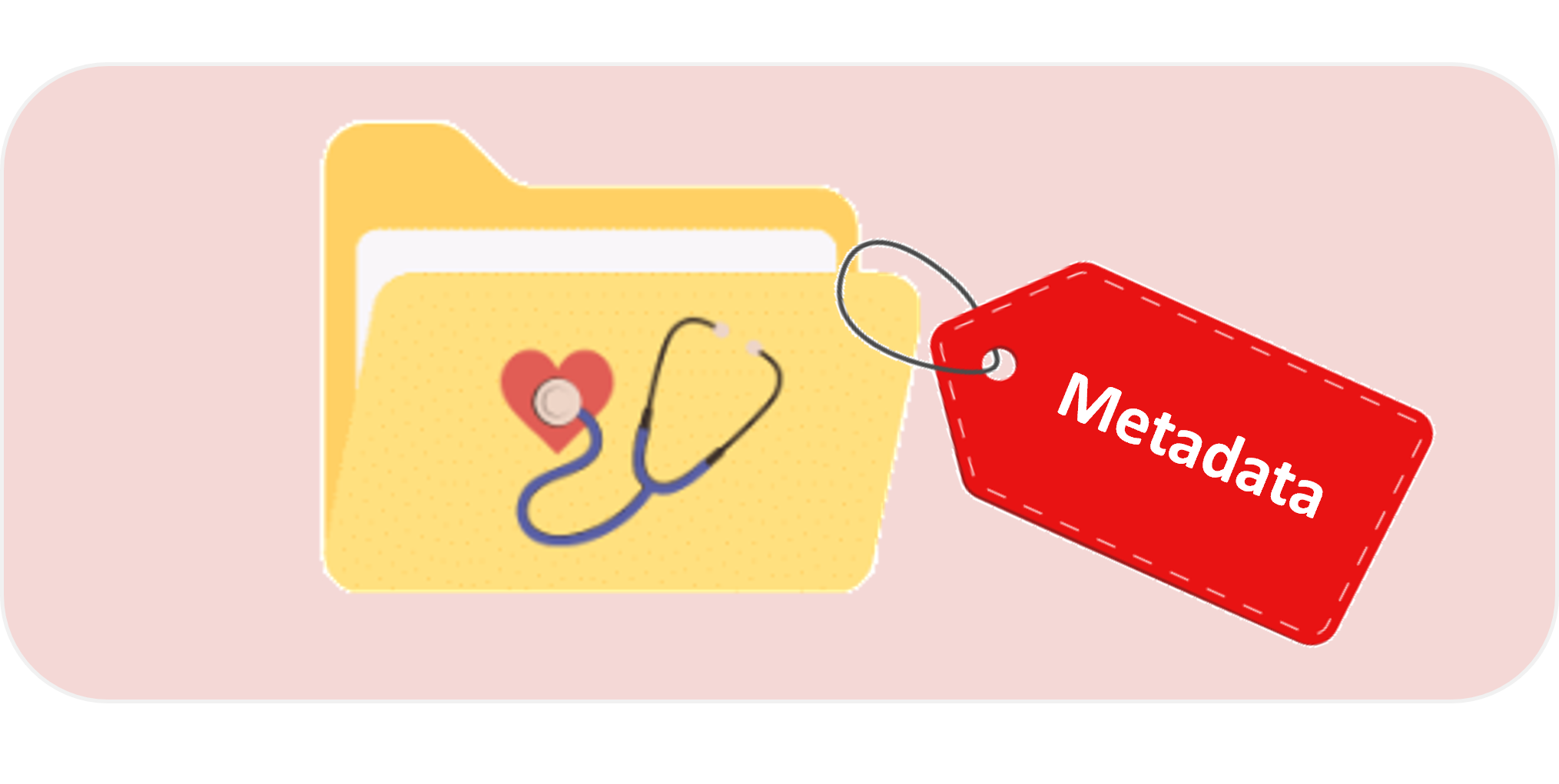
Adding smart metadata with Health DCAT-AP
Every dataset needs context—and that’s where metadata comes in. Metadata is data about the data, it describes the content and properties of a dataset and it tells you what the data means and how you can use it. By assigning metadata using a machine-readable standard like Health DCAT-AP (Data Catalogue Application Profile), datasets are easier to find, understand, and integrate. This ensures clear and unambiguous descriptions for better usability and seamless interoperability across systems.
In short, metadata transforms raw data into meaningful, actionable information.