Click here to discover the 5 major changes
The European Health Data Space (EHDS) offers significant benefits for citizens, healthcare providers, and society as a whole. Citizens have easily access to their health data, gain greater control and better digital insight into their own health data and can share it more easily with healthcare providers, even across borders. This improves the continuity and quality of care.
For the healthcare sector, the EHDS ensures better data exchange and interoperability, leading to more efficient processes, fewer duplicated tests, and more personalized care. In addition, the controlled reuse of health data enables high-quality research, innovation, and data-driven health policy, with strong safeguards for privacy and security. In this way, the EHDS contributes to a more modern, accessible, and sustainable healthcare system in Europe.
4. Change 4
European connection thanks to HealthData@EU
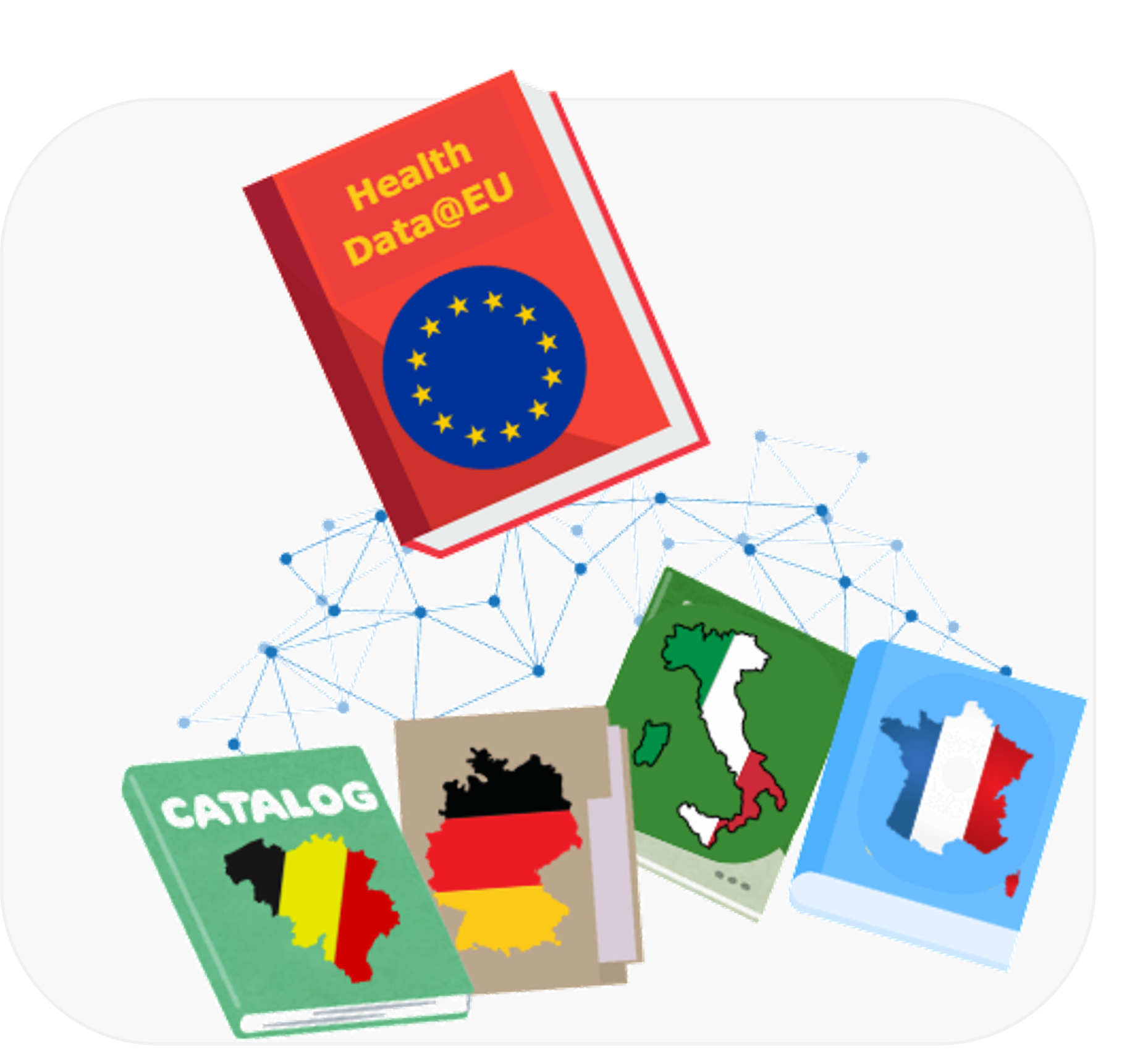
HealthData@EU is the European platform that links health data metadata across all Member States. Each country has a national contact point with its own metadata catalogue. These national catalogues are connected to the European metadata catalogue, creating a seamless network for data discovery and interoperability.
For Belgium, the Health Data Agency (HDA) serves as the national contact point. This means the HDA’s metadata catalogue is directly integrated with HealthData@EU—ensuring Belgian health datasets are visible and accessible within Europe. It is the link to Europe as it connects Belgian data to European catalogues, unlocking a vast amount of national and international health datasets.
HealthData@EU is an European infrastructure that operates as a gateway between national contact points, that securely connects national health data systems, enabling health data to be used securely, in a standardised and controlled manner across national borders. Thanks to this European platform, health meta data from other European member states become available and accessible.