Click here to discover the 5 major changes
The European Health Data Space (EHDS) offers significant benefits for citizens, healthcare providers, and society as a whole. Citizens have easily access to their health data, gain greater control and better digital insight into their own health data and can share it more easily with healthcare providers, even across borders. This improves the continuity and quality of care.
For the healthcare sector, the EHDS ensures better data exchange and interoperability, leading to more efficient processes, fewer duplicated tests, and more personalized care. In addition, the controlled reuse of health data enables high-quality research, innovation, and data-driven health policy, with strong safeguards for privacy and security. In this way, the EHDS contributes to a more modern, accessible, and sustainable healthcare system in Europe.
5. Change 5
Obligation to share data
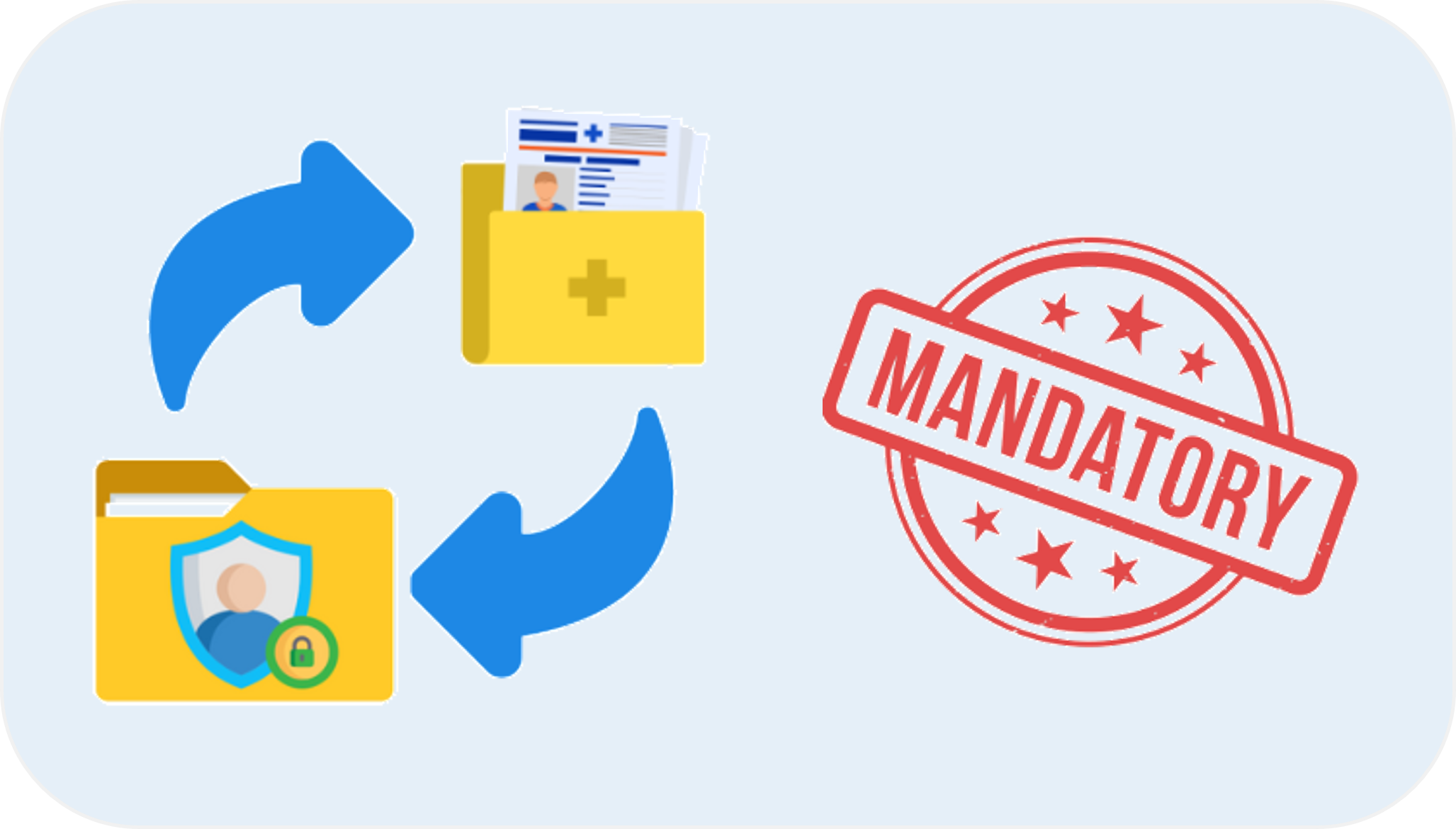
From voluntary to mandatory sharing will be the biggest evolution the EHDS brings for data holders. Today, data holders in Europe are free to decide whether or not to share health data for secondary use. This leads to a fragmented landscape in which access to data often depends on individual choices, contracts, and national rules.
The European Health Data Space (EHDS) fundamentally changes this. The regulation introduces a binding obligation for health data holders to make electronic health data available for secondary use. Once the HDA receives a data request, it checks whether the request complies with the legally and ethically allowed processing purposes. After the request has been approved by the HDA, the data holder cannot refuse and must make the requested electronic health data available within strict deadlines. This obligation ensures a harmonized system that promotes transparency, reuse, research and innovation, public health, and policy-making, while ensuring privacy and security.